
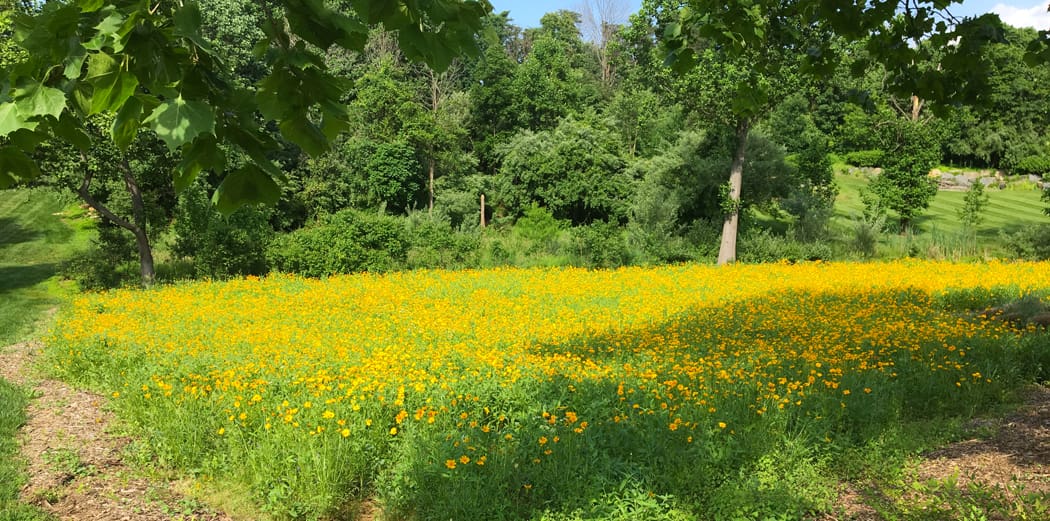
A wildlife garden is a pollinator-friendly garden. It is a habitat made of native flowers and plants that attract butterflies and other pollinators such as bees and hummingbirds. Aside from the pleasure, you will experience while watching the performances of these colorful insects and birds, you will see your garden plants thrive. You will also be pleased to know that the need for garden maintenance will be significantly reduced because once native plants are established, they can take care of themselves quite well.
Garden manager Margaret Miley says that the diversity of plant species in a wildlife garden (also referred to as a meadow) naturally attracts more wildlife because it offers food and shelter for different types of creatures. She says that a typical landscape may have five types of flowers and some turf. But in a meadow plot, there can be as many as 25 different types of flowers mixed with non-flowering plants and native grasses.
Benefits of a Wildlife Garden
Plants and animals work together in a meadow garden. The plant needs the animal, and the animal needs the plant. Margaret Miley, Garden Designer
Plants and animals interact in ways that are mutually beneficial in a wildlife garden. They form special relationships. Here are a few examples of how this works:
Birds.
Birds not only help to distribute seed but they help prepare it to sprout. When a bird swallows a berry or seed pod, digestive enzymes in its belly strip off the outer layer of the seed making it ready to sprout once the bird excretes the undigested portion.
Butterflies.
The monarch butterfly has an unusual relationship with milkweed which is poisonous. It is utterly dependent on the plant as a shelter for protecting its eggs and for feeding the caterpillars when they hatch. The monarch caterpillar cuts the main vein in the leaf, drains the poisonous milky sap, and then eats the leaf. Another butterfly, the spicebush swallowtail, carries the name of its favorite flowering shrub—the spicebush.
Bees.
Bees and butterflies are tremendously helpful with cross-pollination as they flit from flower to flower and plant to plant.
When you take lawn space and replace it with wildflowers, you don’t have to fertilize, lime it, aerate it, use gasoline for the mowers, and blowers—none of that. So, you cut down on the environmental effect of maintaining a lawn. Margaret Miley
Requirements for a Wildlife Garden
If you have an excess of lawn on your property, it would make sense to convert a portion of it into a meadow. Here are the four most important elements needed to start:
- full sun
- average garden soil
- ground that is more or less level
- a planting plot that is weed and turf free
It’s surprising how completely ordinary the requirements are. But carefully executing point #4 will be critical to the success of a meadow garden.
When installing your meadow, your landscape crew must take steps to ensure that turf and weed seed is entirely dead. The most effective and chemical-free way to do this is to cover the area with black plastic in early spring and leave it for six to eight months. The black will absorb summer sun and superheat the planting area sterilizing the ground underneath and killing any stray weed seed. You’ll seed the plot in fall or early the following spring. Miley says it is essential to start with a “clean slate” like this because you might otherwise end up with clumps of weeds competing with your wildflowers.
Meadow Design: Planting in Layers
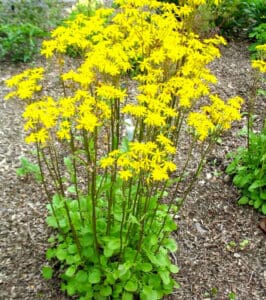
When designing a meadow garden, we plan it in layers. As in a forest, there are “understory” and “canopy” trees. We begin our meadow with an “understory” layer of semi-evergreen or evergreen plants to stabilize the soil. The taller summer-blooming flowers will pop up over top of them. The bottom layer holds the ground in place when the other plants are inactive in early spring. We like to use golden ragwort for a bottom layer plant because it produces showy blooms in early spring then maintains a full leafy green base when the taller wildflowers shoot up in summer.
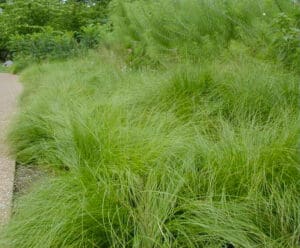
Miley has also experimented with introducing several types of native grasses and shrubs in meadow gardens: There is a fine stemmed native grass called Prairie Dropseed that works very well as a base layer among tall dramatic flowers like echinacea.
For shrubs, in addition to Spicebush, she uses Calycanthus and Sambucus because they provide a lot of food—and bees love the flowers.
Maintaining Your Wildlife Garden
What about maintenance, you ask? Twice yearly, late summer and spring, your maintenance crew will set the mower on the highest setting and do their cutback. They’ll find any spots that look a bit thin, hand toss new seed on them, and use a roller to press the seed gently into the soil. It’s that simple.
So why doesn’t everyone do it? Margaret Miley says it would benefit every yard to have at least 100 square feet of wild space: “I think if we could encourage everyone to do that, then we can make an impact.”
If you’d like to discuss the possibilities for creating a lively, low maintenance wildlife garden on your property, schedule a phone consultation with one of our garden management specialists.
Perhaps you are wondering how to bring out the fullest expression in your landscape and gardens. Our eBook: Choosing the Right Kind of Landscape Maintenance Firm, is full of valuable information to help you understand the fundamental differences between landscape maintenance companies.