

Featured Projects
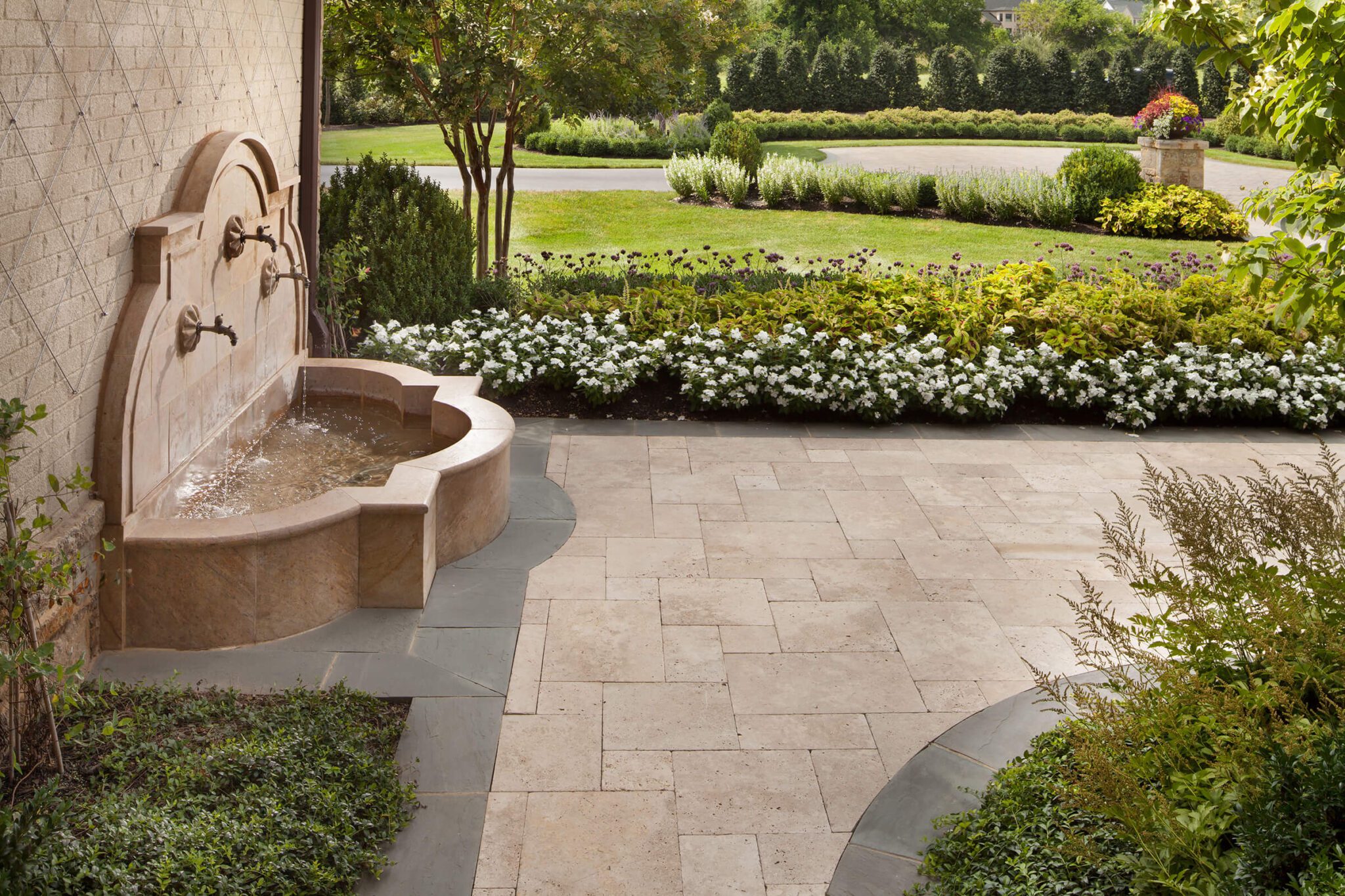
Maximizing Outdoor Living Space in Arlington, VA
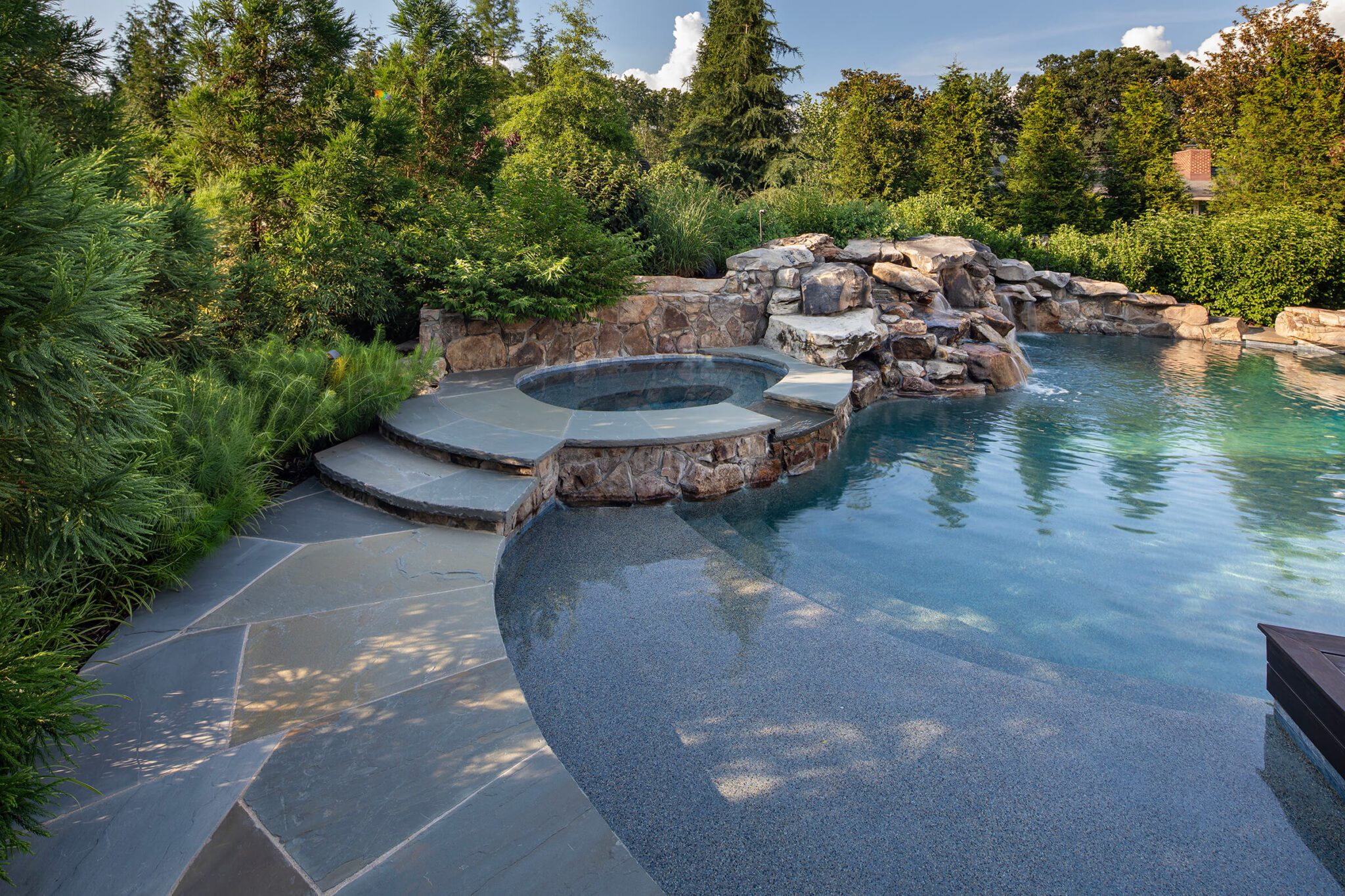
Vacationing at Home in Mclean, VA
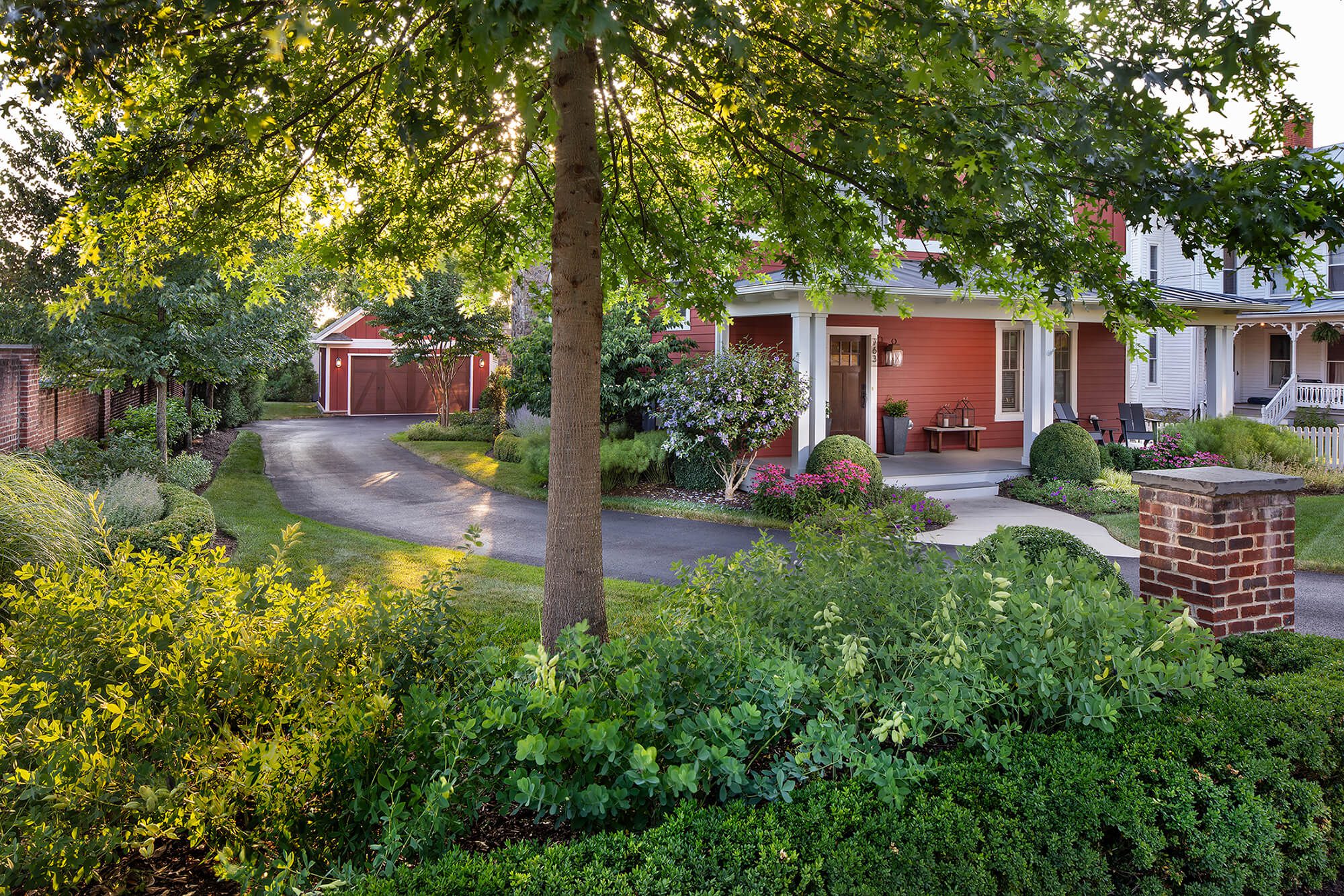
Symmetry, Safety, and Fun in Great Falls, VA
What’s the difference between a nice landscape and one that makes you stop and stare in awe? Naturally, the artistry of the landscape architect and the finesse of the landscape maintenance team has a significant influence on the effect. But the success of that creative vision and expert care is dependent on how well the architect and maintenance crew have mastered the art of landscape layering.
The principles of layered landscaping are employed to create a detailed composition that is balanced overall and at the same time highlights individual elements and focal points.
Early in the design process, a landscape architect must do three things based on a site analysis:
In this article, we are going to focus on the elements of layered landscaping contained in items three and four in the list above. We’ll explain how the landscape architect organizes spatial elements in layers to capitalize on the effects of height, breadth, depth, texture, and variety throughout the landscape. We’ll show you how landscape layering results in a “wow” effect that makes the best use of available garden space and establishes coherent thematic relationships between different use areas in the landscape.
You are at the threshold of an exciting journey. This eBook will provide sound guidance as you take your first steps.
Each type of plant plays a particular role in the landscape. Generally, landscaping plants fall into the following categories beginning with the tallest:
Tall trees work for the background layer and borders of the landscape. Tall shrubs work well as a secondary layer around property borders as privacy screening and as a backdrop for the more intricate landscaping in the middle ground of the view. Low shrubs do well to fill the space in between and as foundation plantings. Grasses and flowers come next, with sedges and groundcovers filling areas near walkways, patios, steps, and under trees.
When designing a landscape and gardens, the landscape architect must organize the composition on two visual planes:
This basic compositional technique of staging or staggering plant groupings is a critical element of landscape layering.
Artfully nuanced landscape layering is what gives your outdoor spaces a consistent overall look and also highlights individual elements. Techniques employed in layered landscaping include moderating elevations, grouping plants according to size, shape, color, texture and seasonal display.
Repetition. Repeating the placement of a particular type of plant throughout the landscape will draw the eye and lead you into and through the landscape.
Scale. Size plants correctly to fill an area fully without crowding. Combine various sizes in groupings of plants so that individual plants support each other visually and make a statement together.
Depth. Arrange plantings with the lowest ones in the foreground and taller plants staged from the middle to the background. Add raised beds and terracing from the middle to background.
Balance. Weave patterns throughout the landscape by combining plant shape, size, texture, leaf shape, and color to extend and balance the compositional themes. It’s important to note here that evergreens and grasses come in many shades of green, so it is possible to get a lot of visual interest with greens alone.
Finally, moderating elevations by using raised or mounded planting beds is imperative for achieving a strong aesthetic effect in your outdoor space. If everything sits at the same level, you can’t see and enjoy the variety of plantings because it all blends together. This is a mistake that is often made by amateur gardeners.
Also, raising planting beds serves a practical purpose because it facilitates drainage which protects the long term health of your plants.
Does your landscaping feel a bit flat and one dimensional? Schedule a phone consultation with one of our landscape maintenance specialists to talk about how we might bring your landscaping and gardens up to their full potential.