
Front of house lighting designs tend to emphasize practicality over aesthetics. Most homes come equipped with basic utility lights at the front of the house. That outdoor lighting design will usually include illumination for the entry porch area, a few low to the ground path lights, and a lamp post at the start of the front walkway.
However, if the landscape lighting design is uneven, if there are gaps, there will be an imbalance between shadow and brightness that won’t help all that much to “show the way” to the front door.
Also, there is often a missed opportunity with front of house lighting. It can be used to showcase landscape features after dark that dramatically contribute to the aesthetic experience of approaching the front door of the house.
In this article, we will take a look at the necessary practical aspects of front yard lighting and the aesthetic possibilities for creating pleasing visual effects in your front yard landscape at night.
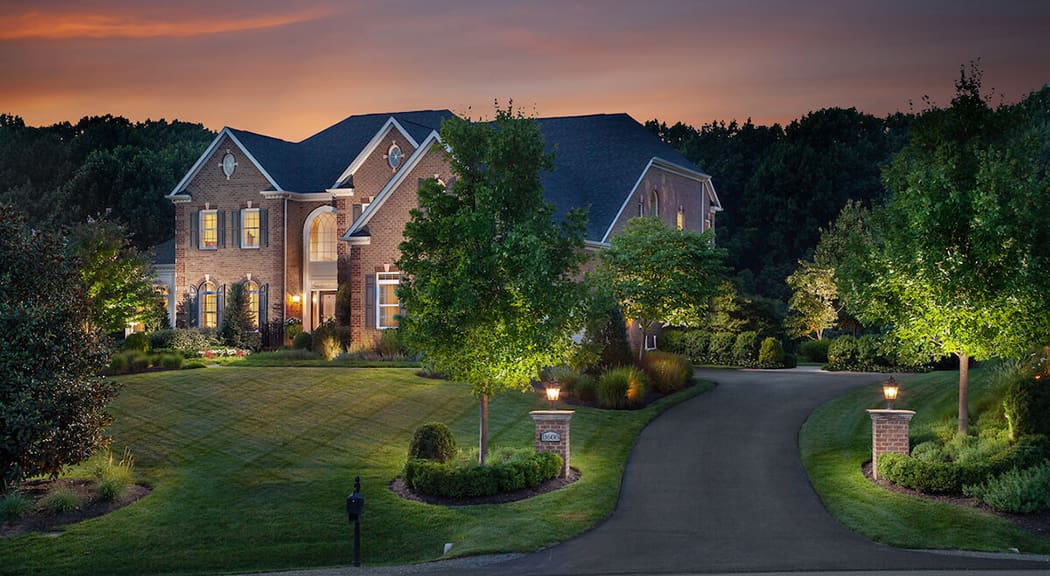
Bring Your Front Yard Landscape to Life After Dark
Outdoor lighting design serves three primary objectives in the front yard landscape: 1) utility, 2) safety, and 3) visual appeal. The first two objectives aim to achieve security and functionality on walkways and steps. The third one serves the aesthetic purpose of showcasing landscape features and architectural details of the home after dark.
It’s that third objective that is almost always underdeveloped in most front yard landscape lighting designs. That’s why it’s important to consider all three when planning front yard lighting. And a good landscape architect will do that. They will find ways to combine both beauty and utility at every opportunity.
Transform Your Front Yard Landscaping Into a Welcoming Arrival Experience
Is your experience of arriving home each day underwhelming? This ebook is for you! Find out how to reinvent your front yard landscape and swap that “blah” experience for a feeling of pride and pleasure.
Front of House Lighting Design for Safety & Utility
The number one reason for investing in outdoor lighting is safety. An improperly designed lighting system has blind spots. There may be areas that are in deep shadow and others that are too bright. The imbalance interferes with vision. This is critically important with front walkway lighting and path lighting designs. If a lighting fixture is not properly placed, it may blind you with glare as you are walking down the sidewalk, or if the lamp is too bright it may throw blotchy hot spots onto your house or into foliage.
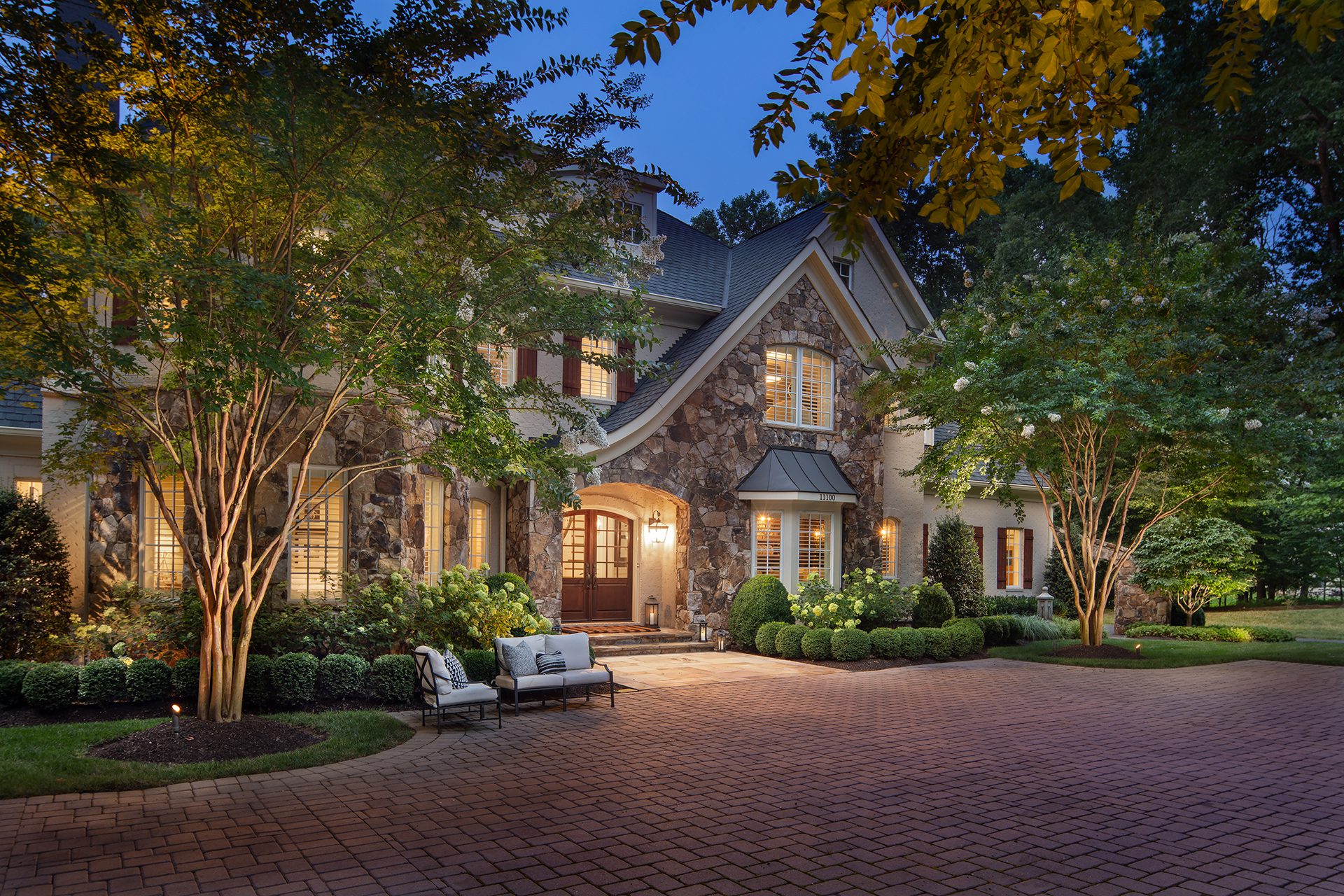
It is important that landscape lighting fixtures be placed in the right locations and be of correct brightness. When lighting steps and walkways, lamps should be positioned low to the ground so as to direct illumination downward onto the surface. To cast light over a broad area, say at the turnaround area of a driveway, we would position lights on poles or in trees.
Any shadowy spots could be dangerous for guests arriving on your property. They could miss a step, or fail to notice a low spot or patch of ice. Front yard lighting must be carefully designed to show the way to the front door of your home and guide guests safely there
Front of House Lighting for Aesthetic Appeal
Professionally designed outdoor lighting makes your landscaping look as good (or better) at night as it does during the day. You will discover a different landscape after dark that can be enhanced by using the contrast between light and shadow to bring out interesting shapes and textures. You can show off the house with low intensity wash lighting, the limb structure of a tree with focused uplighting, or create silhouettes that bring out interesting shapes and textures by using subtle backlighting.
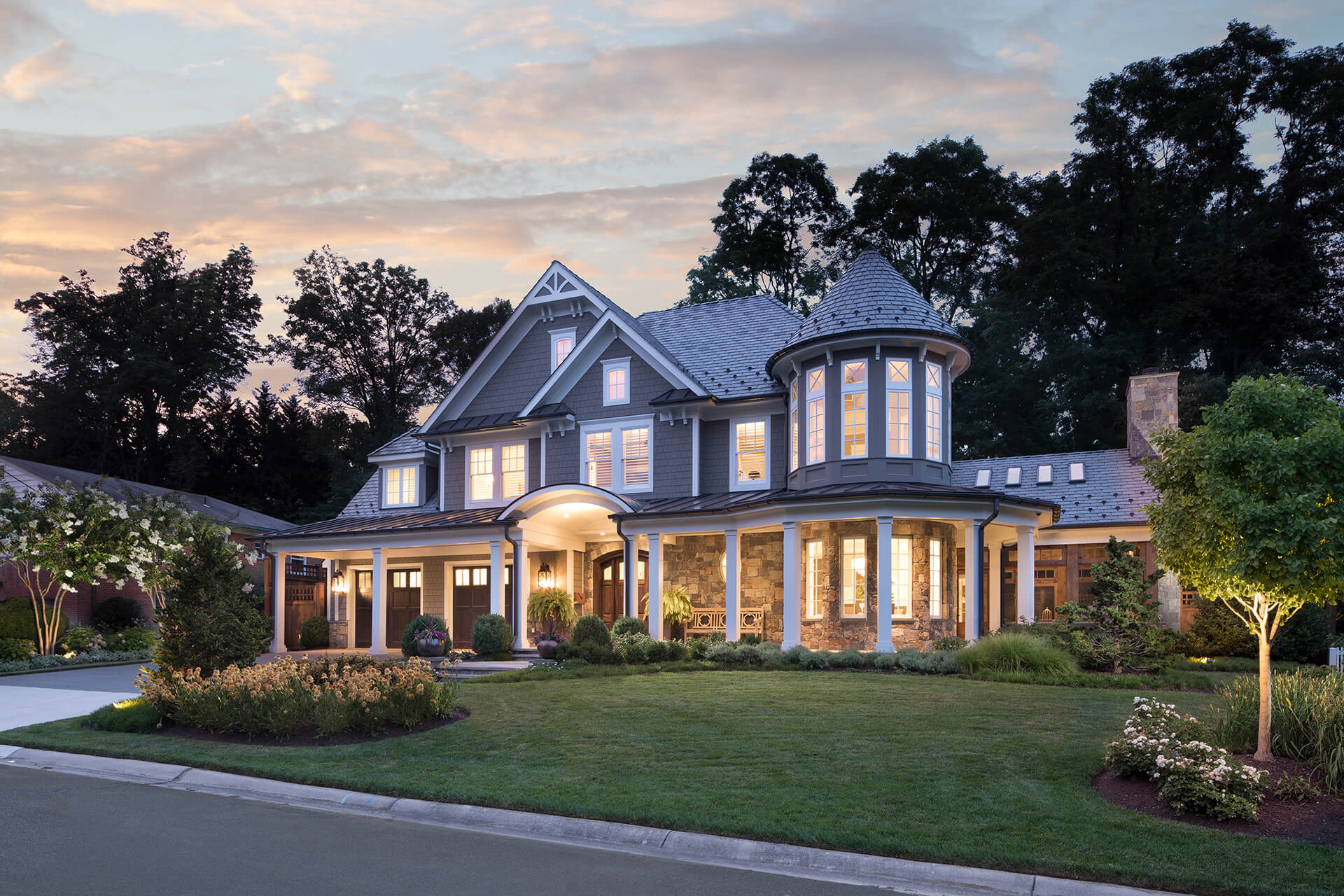
5 Artistic Landscape Lighting Design Techniques
Some of the most frequently employed artistic techniques in landscape lighting design include:
1 Up-lighting
Lighting fixtures are positioned at the base of their subject and focus the beam upward (e.g. to display the trunk and limbs of an ornamental tree)
2 Down-lighting
Fixtures are positioned overhead to direct illumination downward. For example, when attached to the cross beams of a pergola we light the structure as well as the area beneath it. Front of house lighting also uses this technique when directing illumination downward onto a walkway or path for safety.
3 Moon-lighting
An artistic variation of downlighting in which fixtures are attached high up in trees to cast diffuse beams through the branches–thus creating a moonlit effect that casts interesting shadow patterns on the ground
4 Silhouetting
Fixtures are positioned behind an object to illuminate a wall or fence thus outlining the form of the object in front of the wall. We can also create a “halo” effect around the backlit object
5 Washing
This technique is often used to bring out texture on a large surface such as a stone wall. Fixtures generally “wash” diffuse light across the object from an oblique angle.
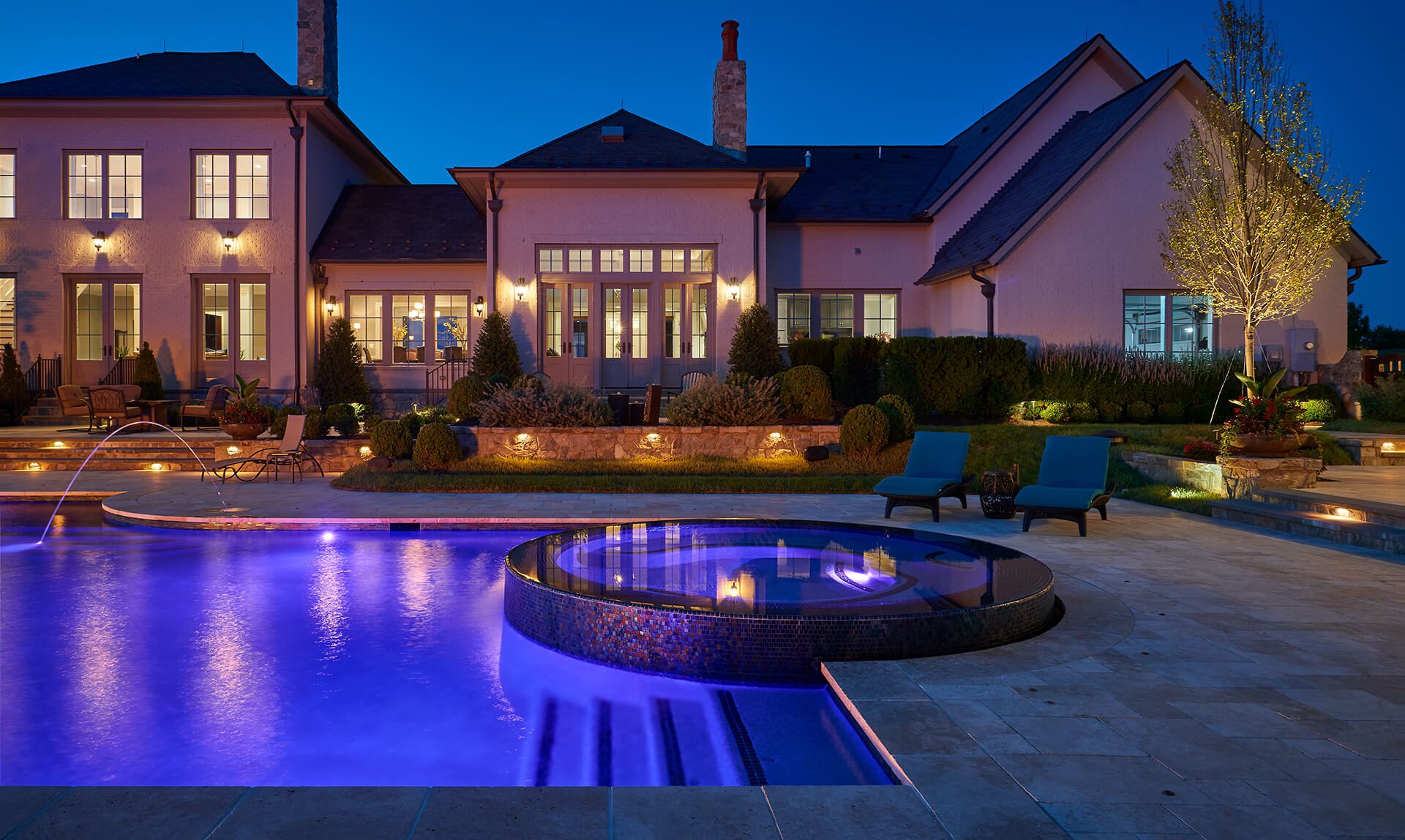
The Best Outdoor Lighting Systems Offer Versatility
Low voltage outdoor lighting systems today allow you to create a variety of moods using color temperature correction and varying brightness levels.
Color gels can be inserted in front of lamps to display holiday appropriate hues for Halloween, Christmas, Valentine’s Day. Outdoor lighting systems today can be programmed and easily be customized to fit any occasion.
Honestly, there is a lot to think about here. But discussing front of house lighting ideas with a landscape architect will help you to select the landscape lighting design elements you need to bring a new dimension of visual appeal to your front yard while brightening the way to your front door!
Thinking about improving your front yard landscape design? Our eBook: Transform Your Front Yard Landscaping Into a Welcoming Arrival Experience, is full of valuable information to help you get started.