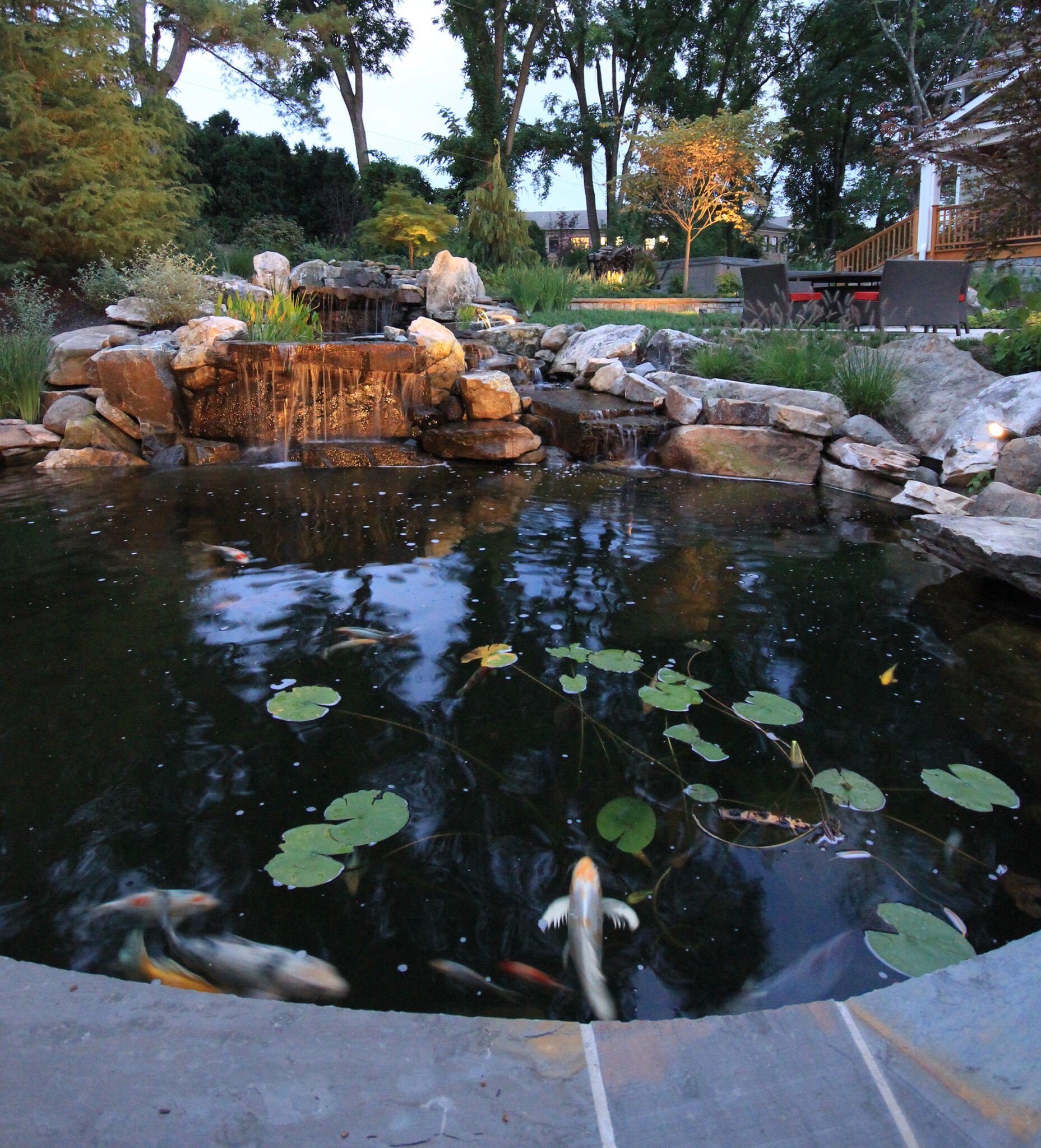
The decision to invest in a koi pond for your outdoor environment is a big one. That’s why we’d like you to be as informed as you can be about the essential elements of koi pond maintenance and design before you make the investment.
A backyard pond can bring many joys if it is designed and built correctly and maintained regularly. The murmur of a waterfall, the stillness of the pond and the liquid movement of fish introduce a special kind of magic into a backyard environment.
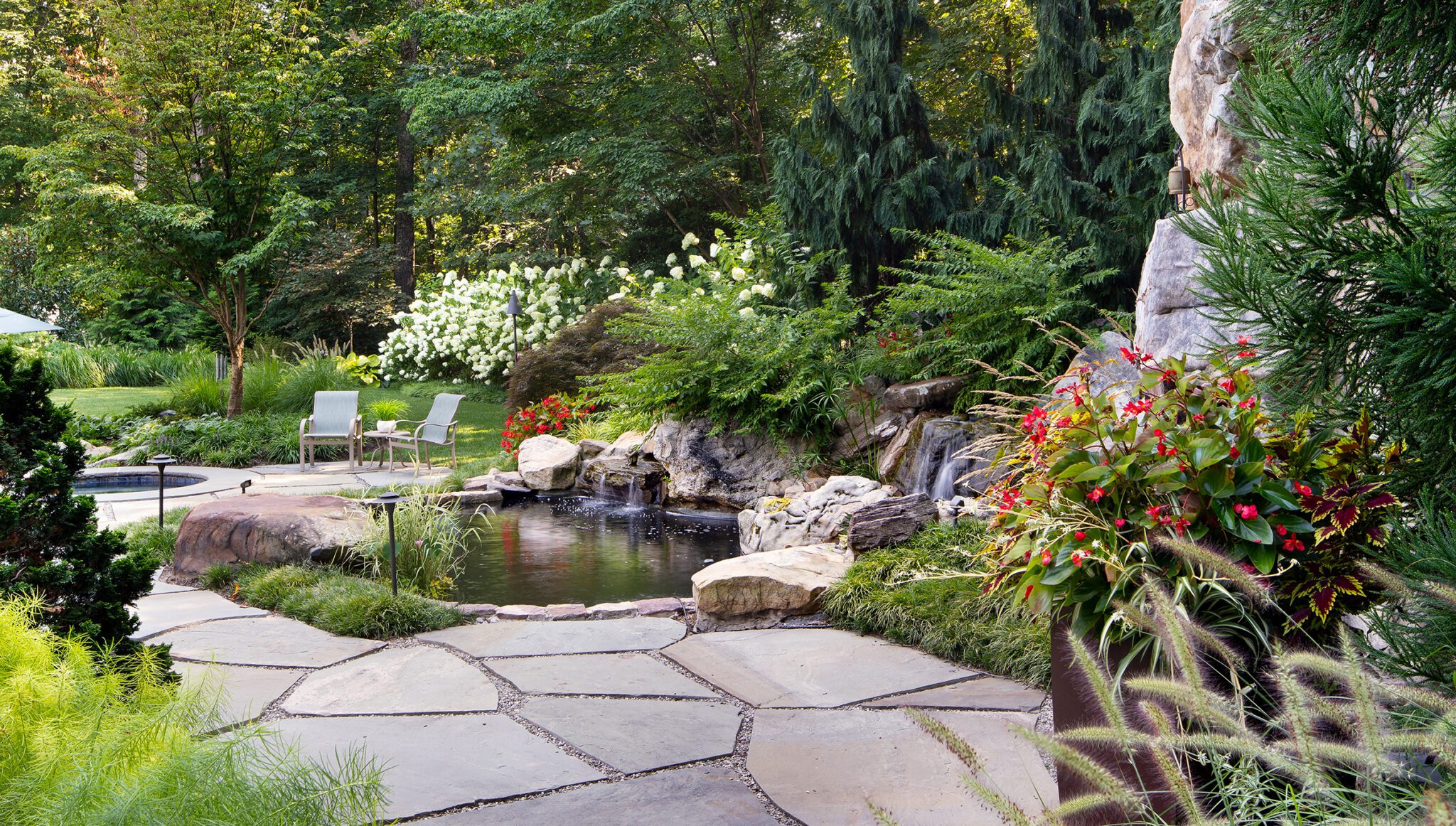
The first half of this article will describe all the important aspects of koi pond maintenance and specialty equipment requirements. The second half will present a personal story that illustrates the disappointments of poor pond design contrasted with the joys of one that is correctly designed and built.
Pond Maintenance: Supporting a Healthy Aquatic Environment
Koi fish need regular care to ensure their good health and longevity. Maintaining clean, clear pond water is the most critical part of your koi pond maintenance program.
For a small koi pond with a small fish population, a homeowner could opt to do the maintenance themselves. For ponds of more than 3,000 gallons, professional service is recommended because water clarity is essential to the health of the fish.
Unlock the full potential of your lawn and gardens!
What’s the difference between a conventional landscape company and one whose staff understands design, horticulture, and landscape systems? To find out, click the button below.
Koi pond maintenance visits can be scheduled weekly, bi-weekly or monthly depending on your needs. Filters and skimmers require cleaning on a weekly basis to assure clean, healthful water for the fish. It is also important to periodically inspect all equipment to make sure it is operating properly.
Koi Fish Care: Preparing your fish for winter
In addition to maintaining the proper pond equipment, it is important to maintain a koi fish care program administered by a professional. This becomes especially important as cold weather approaches at the year’s end.
In autumn, a few weeks before the water temperature drops to 50-degrees, professionals advise changing their diet to a light wheat germ-based food that’s easier for the koi to digest. Once the daytime water temperature settles at 50-degrees, stop feeding—and it is important that you do not start up again.
For example, if there is a warm up a few weeks after you’ve stopped feeding, the fish may come to the surface looking for food. Do not feed them. Their bodies have started to shut down and go into a dormancy state, so they won’t be able to digest food properly.
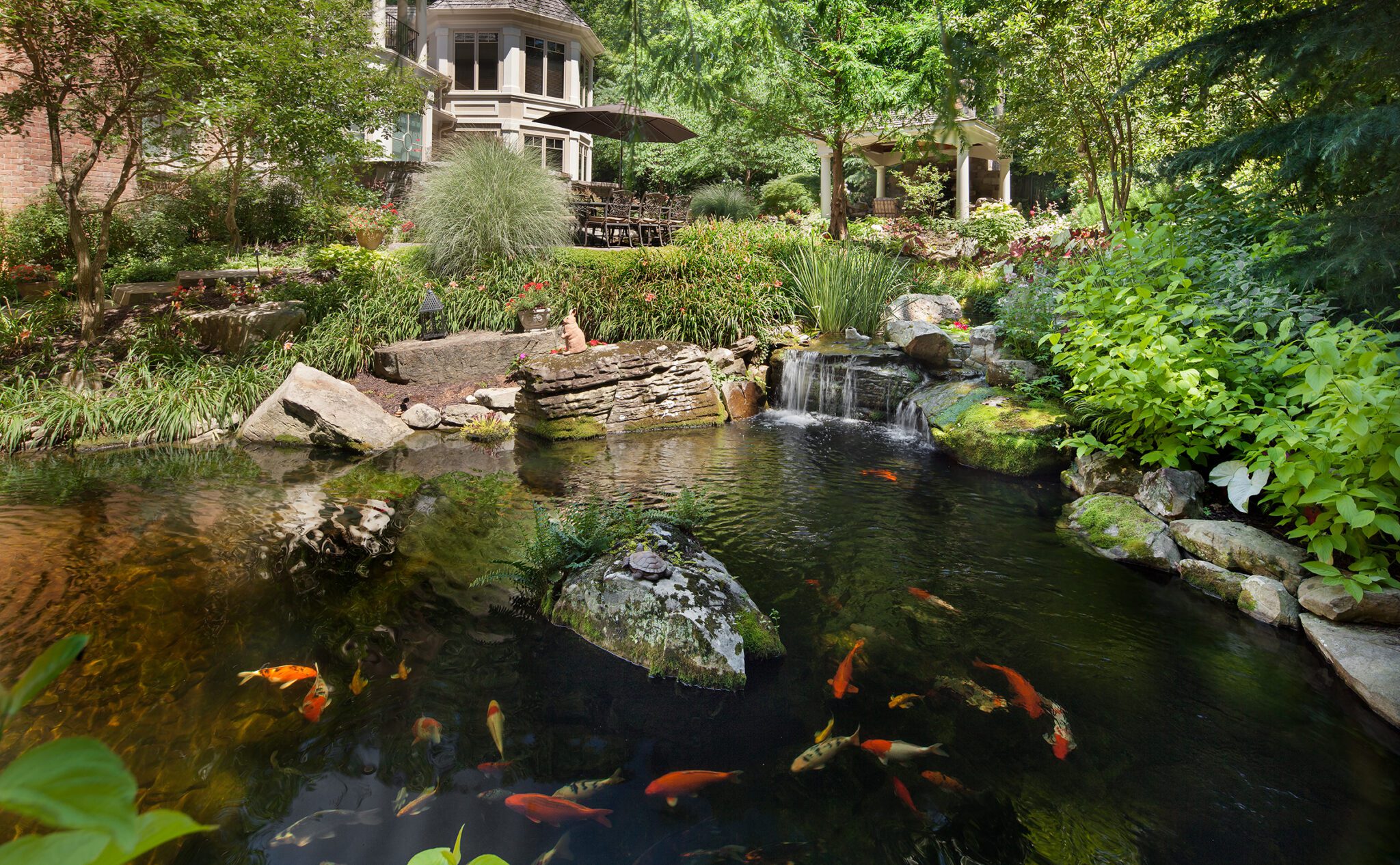
While Fish Sleep: Winterizing a Koi Pond
Although the fish are asleep for the winter, your koi fish care program continues. There are equipment maintenance tasks and periodic visual checks that need to be done to protect your fish until they wake up in spring. It’s best to rely on a professional to winterize your koi pond.
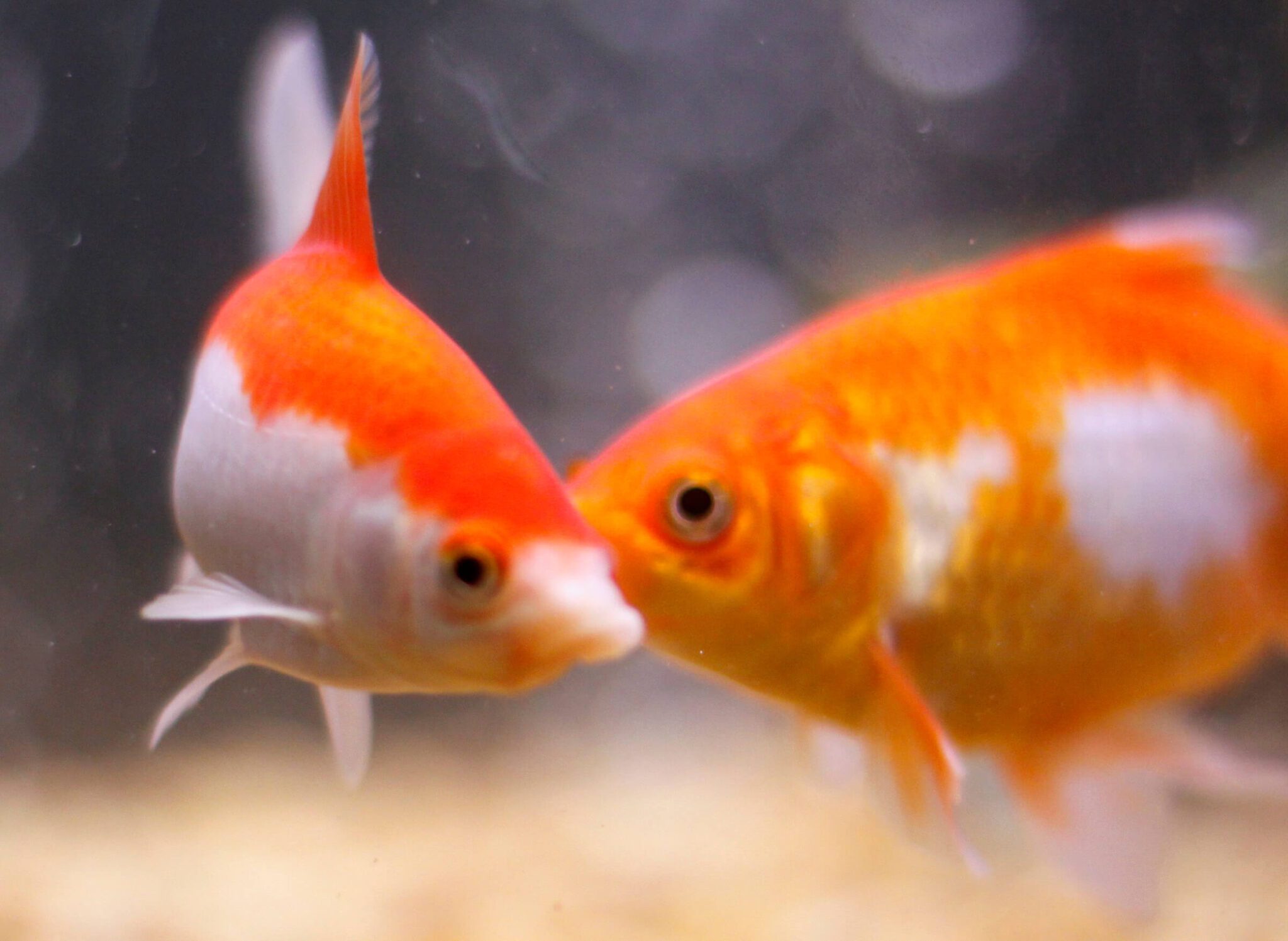
Koi Pond Maintenance Equipment
The most important step in the process is to invest in a correctly designed and properly equipped pond. If you get that part right, the ongoing pond maintenance is much easier to sustain.
Here is our koi pond maintenance equipment checklist:
- Pond Depth. Minimum depth for healthy fish is 2.5 feet. Four feet is preferred.
- Pond shell. Walls should drop straight down from the sides and curve toward the center at the bottom.
- Bottom Drain. The negative pressure created by the drain pulls fish waste and organic debris off the bottom of the pond.
- Smooth Surface. A smooth bottom surface free of pebbles or stones prevents debris and waste from snagging on objects.
- UV Purification. Ultraviolet light kills harmful bacteria and controls algae blooms
- Filtration System. This can be a two-part or multi-part system depending on the pond size. A skimmer basket floats on the surface plus at least one of three types of filters that trap debris ranging in size from rough to fine particles. A large pond would have all three filtration levels.
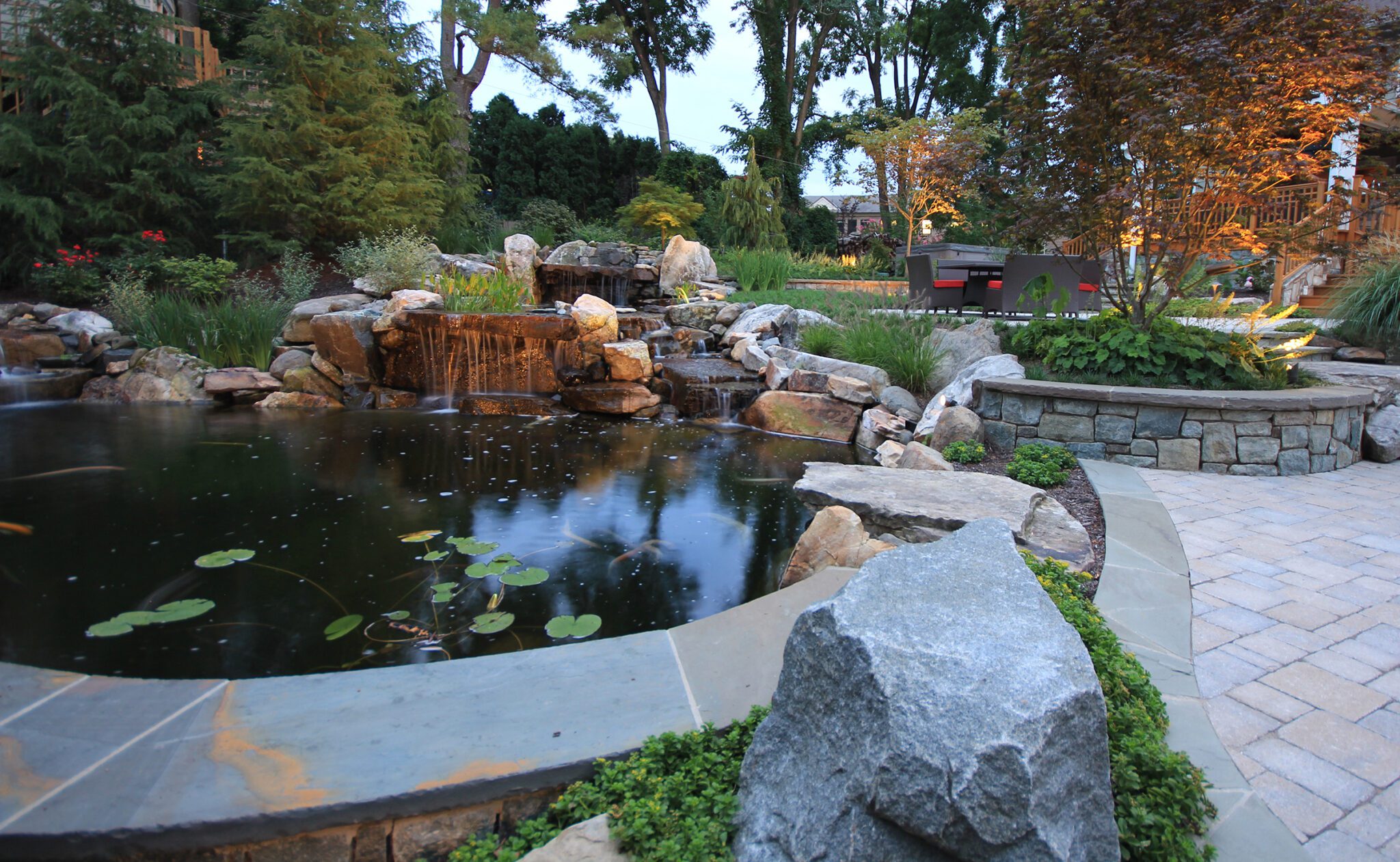
Keeping a koi pond is not a “set and forget” endeavor. Homeowners may take responsibility for some of the routine pond maintenance and koi fish care if they wish. But it is best to hire professionals to maintain the pond filtration systems, ensure proper Ph levels and water temperature, and to monitor fish health.
Frozen Fish: A Koi Pond Design Glitch
When Andy and Carolyn bought their Vienna, Virginia home, it came with a koi pond that, as they found out, wasn’t so well designed. Every winter the pond would freeze, and the fish would die because the pond was too small and shallow.
This backyard pond wasn’t much to look at either. “Two murky bathtubs connected by a piece of PVC pipe”, that’s how Andy described it. Even so, he liked it: “I always found it peaceful, and I liked the fish.”
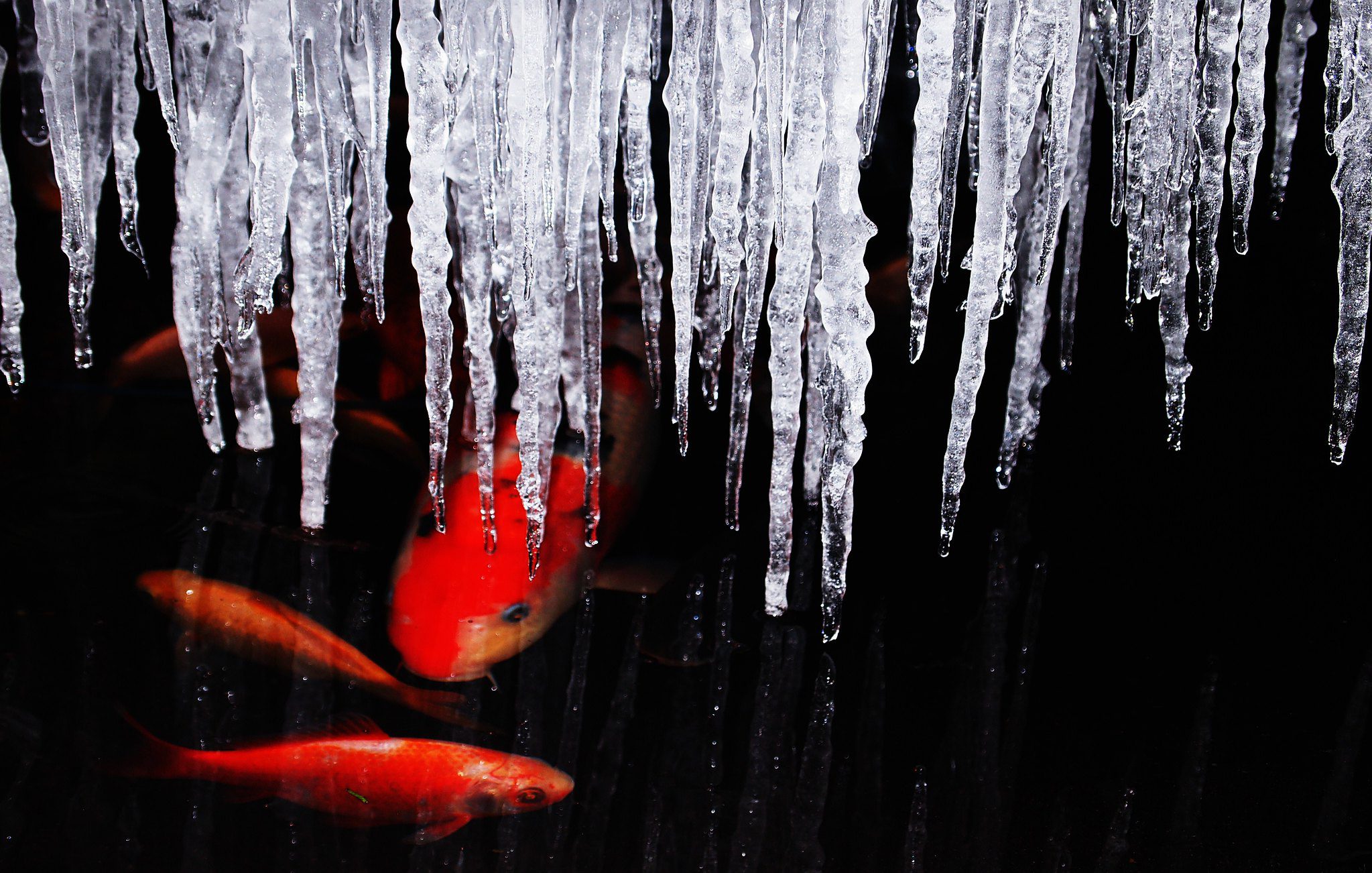
After enduring several seasons of frozen fish and murky pond water, Andy persuaded Carolyn to invest in improving the pond environment. They asked Surrounds to redesign the pond and add a waterfall.
“As they were building the pond, I saw piles of boulders, big trucks rolling through my yard and this huge, huge hole. I’m thinking this is crazy and it’s going to be a waste of money.” –Carolyn, koi pond design client
Now the koi pond is vast (16,000 gallons) and the centerpiece of their landscape. It’s the main attraction, especially for the kids. Carolyn says, “The kids all want to do their play dates here and want to be outside the whole time.
Backyard Pond: A Source of Joy
Maintaining a garden koi pond can be a great source of joy. At the same time, it is important to understand that a koi pond is different from a standard garden pond. A koi pond is specially designed and equipped to provide a sustainable habitat for the fish.
Although a backyard pond is a big responsibility, it provides respite from the daily grind. For those who’ve made the investment, the peace and relaxation that come with keeping koi can provide hours of enjoyment outdoors.
“I am a busy person, but I have never used a backyard like this one. We are always out there—ten times more than we ever were before”. –Carolyn
Koi Pond Art and Artifice
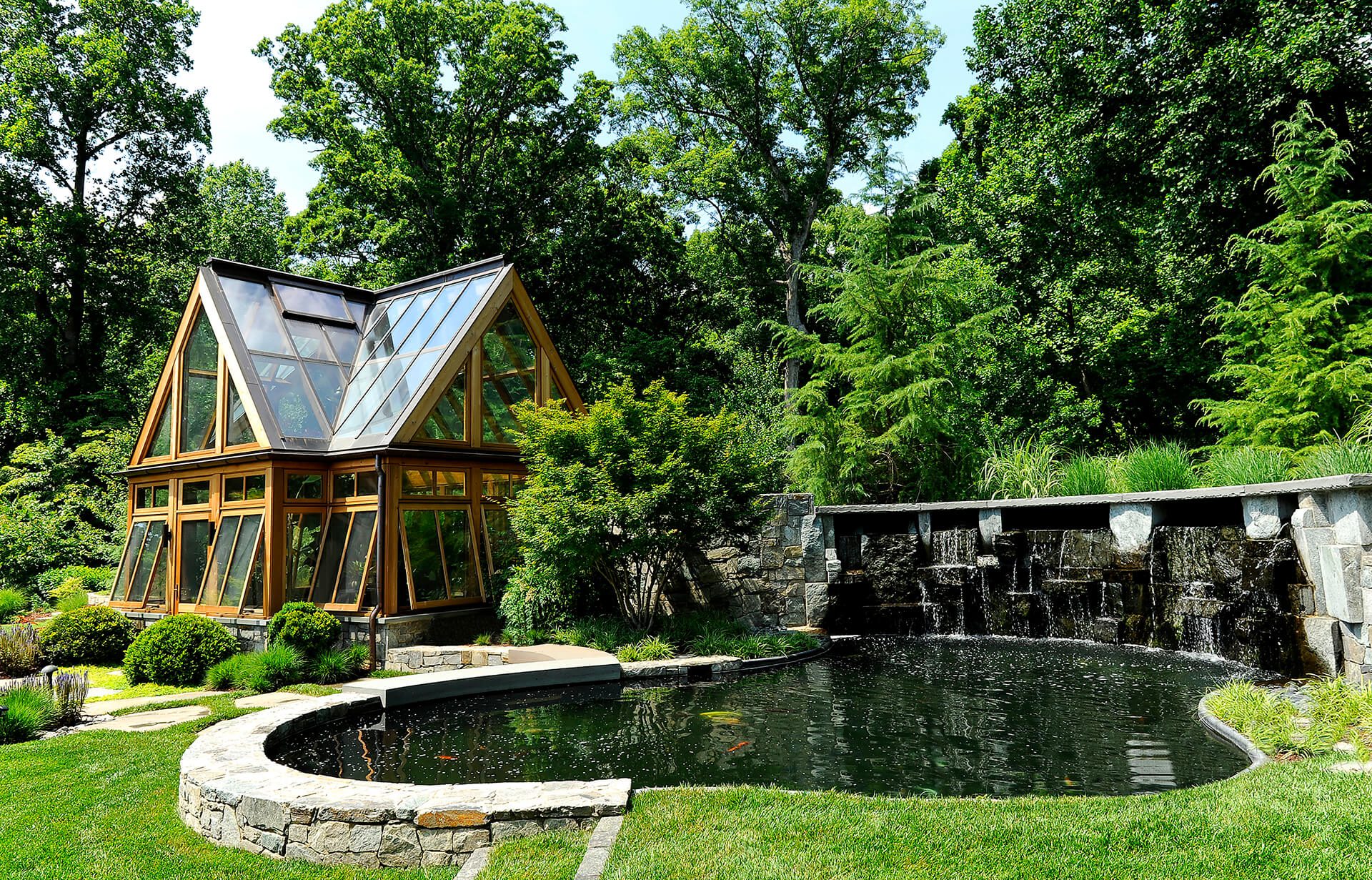
Backyard ponds and waterfalls go together. That’s why, when we design a pond, we usually combine it with a waterfall. There are a couple of reasons for this.
One, is aesthetics. The waterfall makes a beautiful focal point and contributes pleasing sound to the pond environment. The music made by falling and moving water is integral to all garden water features such as fountains, waterfalls, and ponds.
“It’s just a great place to sit out on a rock, have a cup of coffee, listen to the waterfall, and watch the fish. It is a living, breathing thing. It’s constantly changing. I’m thrilled that we have it.” –Andy
Another reason is that a waterfall naturally provides circulation and some of the aeration that koi fish need.
People enjoy keeping koi fish for various reasons. For some, the fish are collector specimens; for others, they are pets. Most people say that keeping koi is a source of stress relief, and visiting the koi pond provides them refuge from the daily grind.
Whatever the reason, proper design and maintenance of your koi pond is essential to the enjoyment of your experience because koi aren’t just garden decoration.
If you have a pond and feel it isn’t getting the attention it deserves, call to schedule a consultation with one of our garden management specialists to discuss a koi pond maintenance plan.