
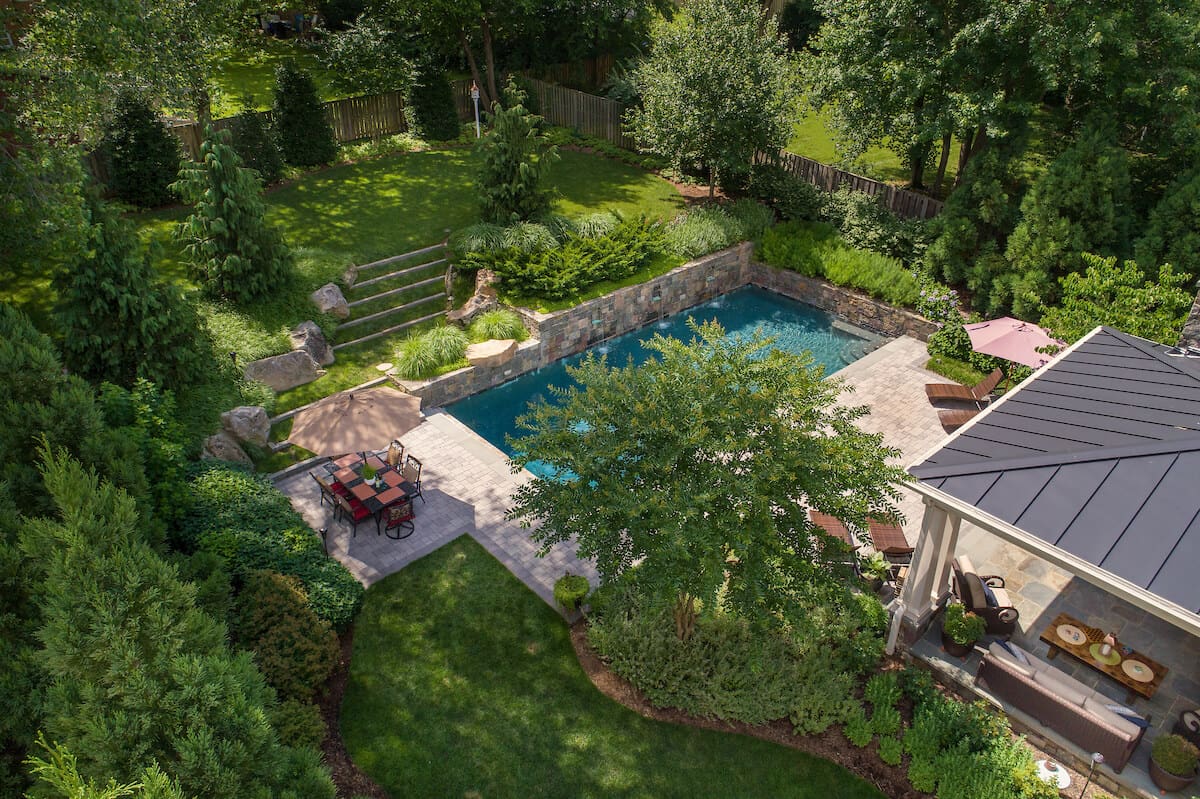
Sun is an essential ingredient in any outdoor space, but too much sun and plants will wilt right alongside your desire to spend time in your backyard. Too little sun and your flowerbeds, vegetable garden, and beautiful landscape will never grow. You need to find the perfect balance between sun and shade.
The problem is that it’s easy to get a lot of sun, but it’s not quite as easy to create shade that lets you comfortably enjoy the outdoors without a sunhat and endless amounts of sunscreen.
The good news is that even if you don’t have any mature shade trees on your lot, a landscape architect can still create areas of full or partial shade where they’re most needed. They’ll take into consideration every area of your yard and—using a combination of existing natural features and built structures—find that perfect balance of sun and shade you’ve always wanted.
Balancing Sun & Shade in Your Backyard
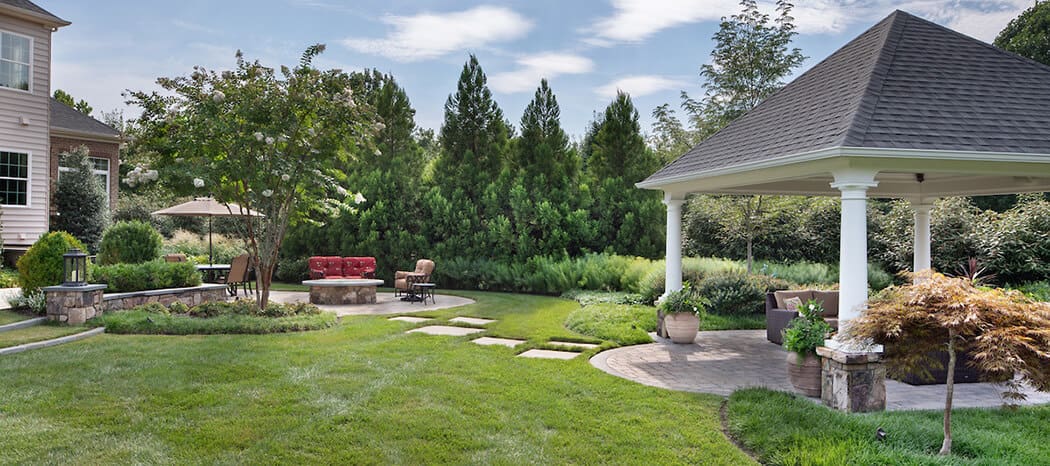
The first step to creating shade in a sunny backyard is to take into consideration your current sun exposure. Your landscape architect will automatically look at your usable space and make recommendations for how to handle the sun. They’ll evaluate everything from how effective your current shade plants and trees are to the direction the sun shines at those times of day when you’re outside the most.
Most importantly, your landscape design professional will ask you about where in your yard you need shade and at what times of the day. The answers to their questions will determine the types of options open to you and how effectively they can meet your needs. From there, it’s just a matter of choosing and planning the best shade for your yard.
Types of Shading
When planning shade for your backyard, there are a variety of options. Most of the time, employing a mix of planted, built, and mechanical shade elements are best. This way you can enjoy some amount of shade while allowing the necessary time for newly planted trees and shrubs to fill in and provide natural shade.
Below, we outline the three most common ways to add shade to your overly sunny yard and why they should be considered.
Option 1: Mechanical Shade Structures
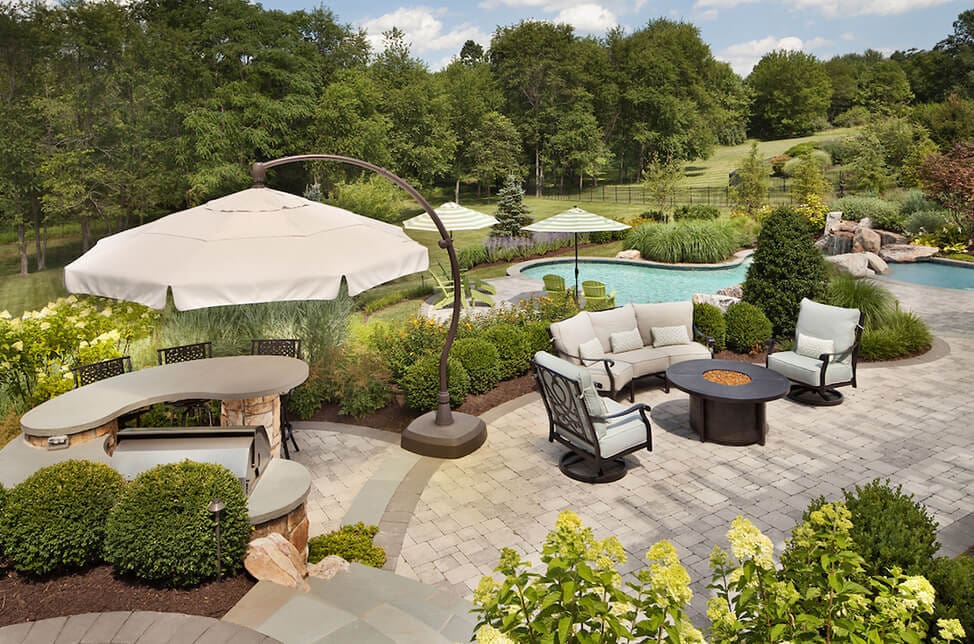
Awnings, umbrellas, and sun-screening canopies are all mechanical shade structures. They add shade to your yard immediately in ways that are flexible and unique—the umbrella is the most flexible because it can be moved around your yard as needed.
As for a sun canopy, although it requires some construction, it’s the best solution when you want to shade a large area. It adds a contemporary flair to any yard, and best yet, it softens rather than blocks light. This means you can diminish the heat and glare of the sun while keeping brightness underneath.
Option 2: Living Shade Screens
If you’re willing to wait a little while, a green wall of hedging trees is a fantastic option for throwing shade across an open patio area during the late afternoon or early morning. It’s an ideal solution for individuals who enjoy their morning coffee outside or relax out on their patio in the evening after work. Depending on the type of bushes and trees you plant (fast or slow-growing), the results can be instantaneous, produce shade in a few years, or be meant to provide shade a decade or two down the road.
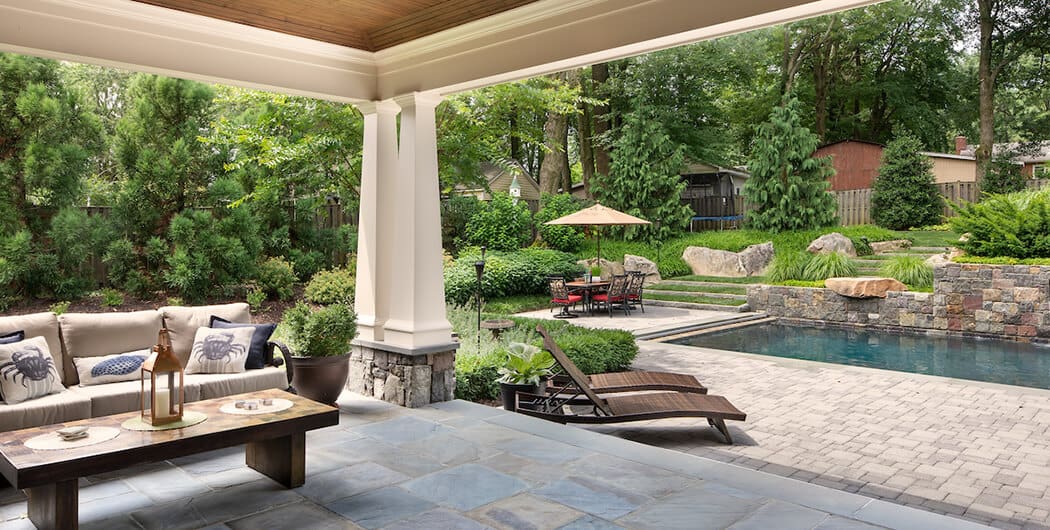
Your landscape architect will help you decide the right shade tree to solve your problem. In most cases, you won’t need a full-sized plant. However, if your budget allows, you can plant a full-sized tree to provide instant shade all day long. And you won’t have to wait 10-15 years for it to branch out and provide relief.
Whatever you decide with your architect, living shade screens add character and old-fashioned beauty to your yard.
Option 3: Built-Shade Structures
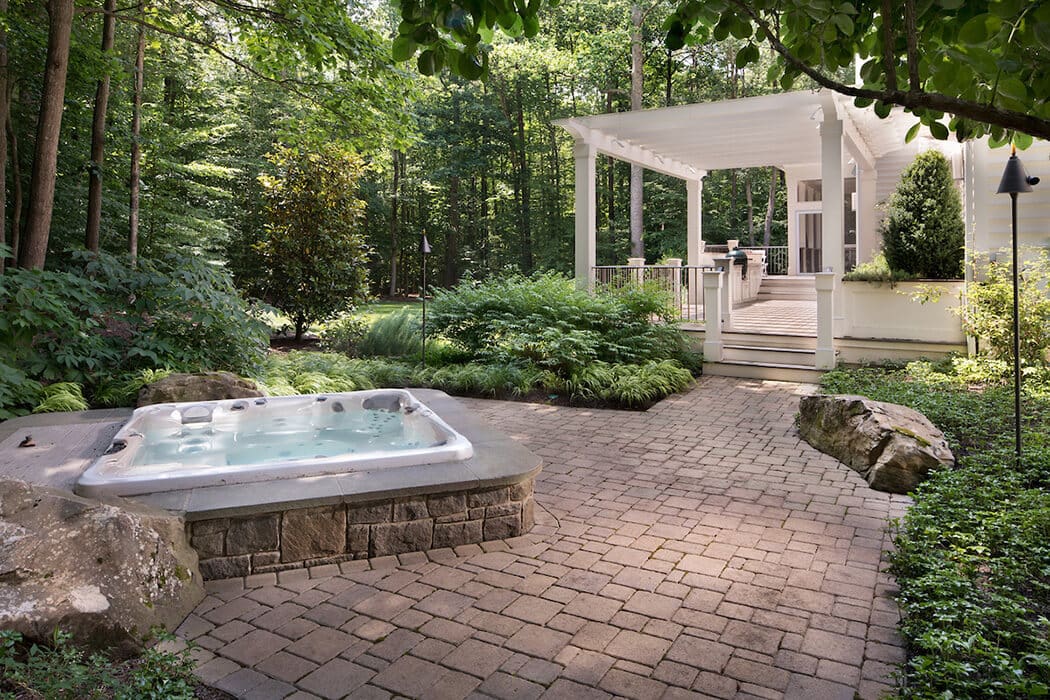
The final option is building a structure that provides full or partial shade. Your architect might suggest a pavilion or a pergola to protect a portion of your yard from the sun as you need it. A pavilion offers full shade while a pergola provides partial shade before 10 am and after 2 pm when the sun hits it at an angle. By increasing or decreasing the number of rafters and purlins (smaller cross-hatching timbers), your architect can control the amount of shade your pergola produces. By adding vines, you can create something between full and partial shade along with a lovely ambiance.
You’ll work closely with your landscape architect to choose the combination of shade solutions best suited for the conditions in your yard. Depending on when you use your backyard and the activities you enjoy the most, you’ll want to install different options. Your architect can offer recommendations from simple quick fixes to long-term, permanent solutions, so the result is a backyard that you’ll love using clouds or shine.